


What Are Rock Drilling Bullet Teeth: Premium Round Shank Chisels for Hard Rock Applications
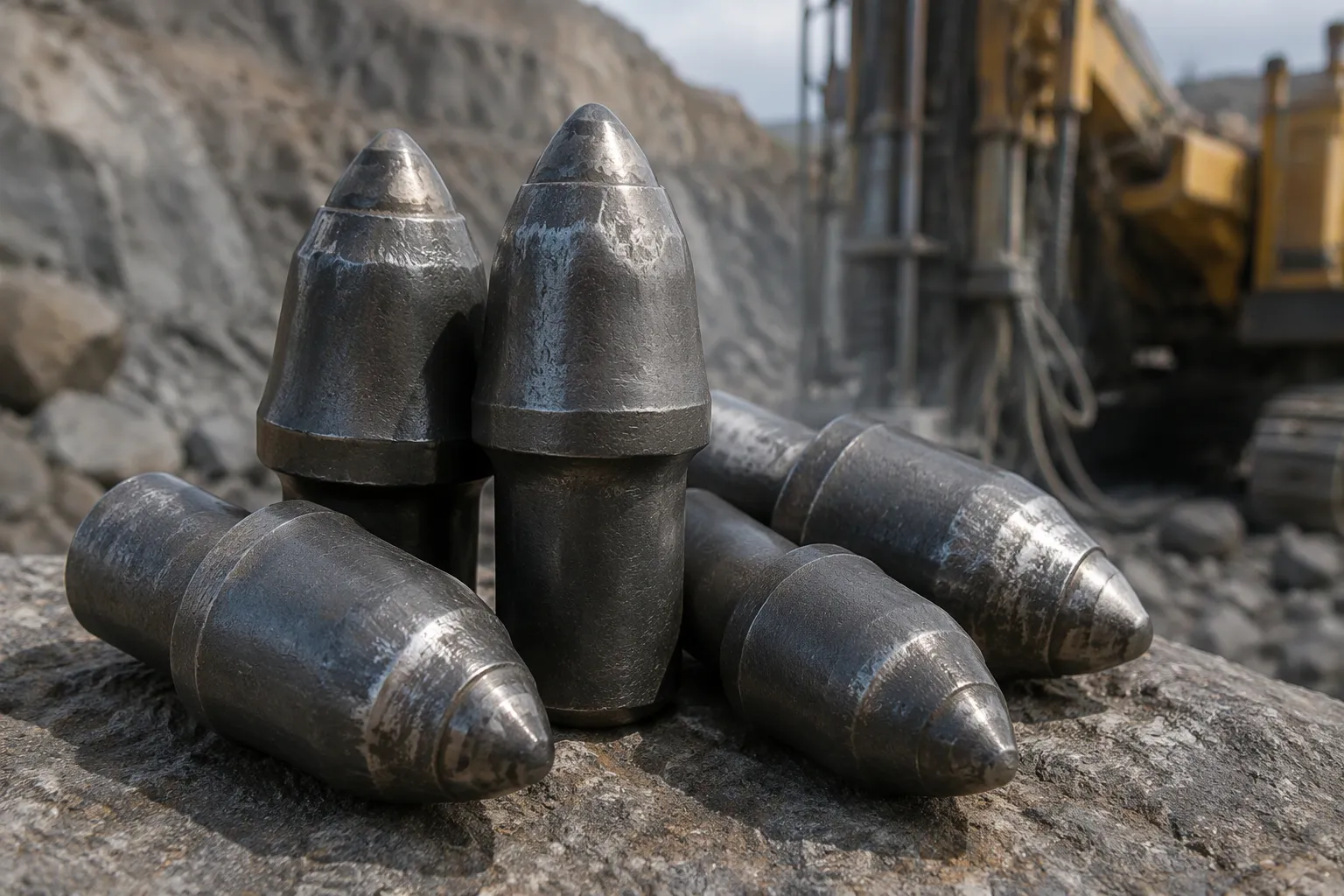
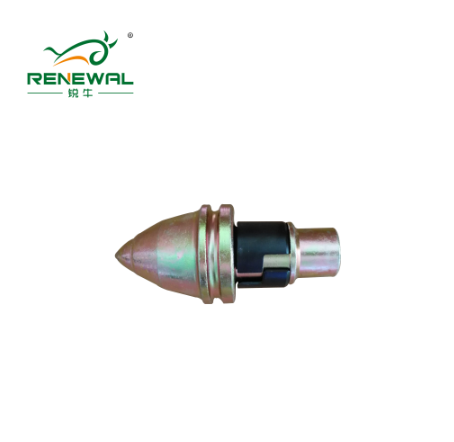
Rock drilling bullet teeth are cutting tools with carbide tips that attach to drilling equipment. The industry also calls them round-shank chisels. The cone-shaped bullet tip puts force on one point, a principle called point loading. This point loading breaks hard rock and rough formations efficiently. A tungsten carbide tip resists wear, while the steel body provides toughness. Bullet teeth are replaceable cutting tools, unlike welded cutting edges. Crews use them in foundation drilling, mining, and tunneling. Operators swap a worn tooth quickly and get back to drilling. Design details, the working principle, hard-rock fit, comparisons, and selection and maintenance guidance all matter to the final result.
Key Takeaways
Rock drilling bullet teeth are replaceable cutting tools with a carbide tip that breaks hard rock efficiently.
The cone-shaped tip focuses force on a small spot, which starts cracks and speeds up drilling.
Round shank chisels work best in hard, abrasive rock, while chisel bits suit softer rock and small holes.
Choose the right tooth by matching rock hardness, abrasiveness, drilling method, and hole size.
Check tips often and replace worn teeth early to keep drilling fast and avoid damage.
What Are Rock Drilling Bullet Teeth
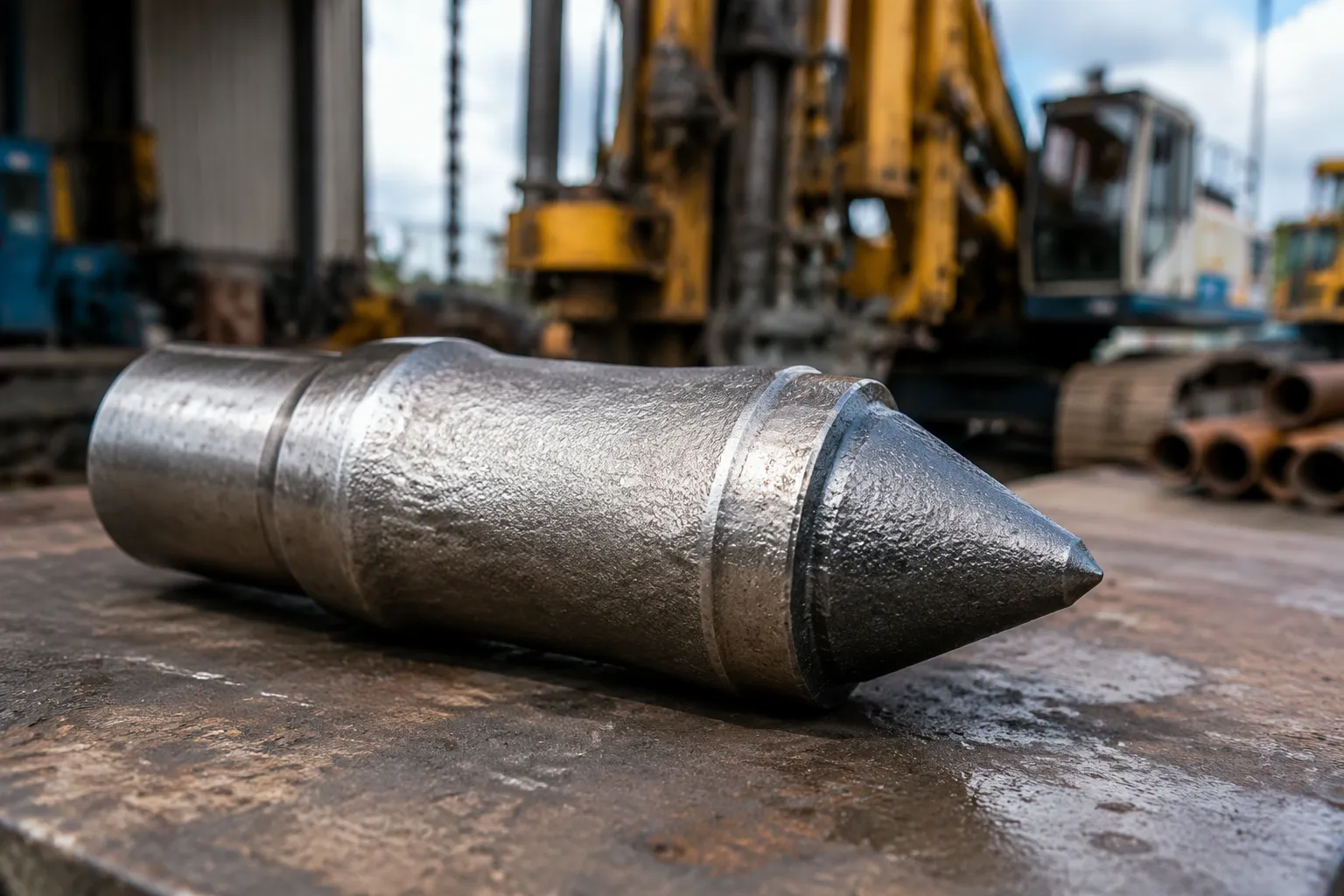
Rock drilling bullet teeth are cutting tools you can replace. Each tooth has a cone-shaped tungsten carbide tip on a steel body. People in the industry also call them round-shank chisels. Piling Machine India defines a rock bullet as a cone-shaped cutting tooth mounted on the front edge of a rotary drilling tool. The tooth is the first part to touch the ground. Jewinner Parts notes that this position lets the tooth act as a wear part and protect the auger system from too much stress and damage. Crews use these tools in foundation drilling, mining, and tunneling. The replaceable design sets them apart from welded cutting edges. Operators swap a worn tooth quickly and get back to drilling. Tool quality and strength decide how long the machine works, according to Changzhou Renewal Machinery.
Foundation drilling teeth run on piling rigs and rotary drills for deep foundation work. Mining and tunneling cutter bits mount on continuous miners, roadheaders, and tunneling machines. APIE Piling reports that these tools cut hard rock, coal, and ore in underground and surface operations.
Anatomy of a Bullet Tooth
Two materials do two different jobs. The tip is sintered tungsten carbide. The body is forged alloy steel. Rockway Machinery lists common body grades such as 42CrMo, 40Cr, and 35CrMo. Aili Parts reports that the carbide tip often uses low-cobalt material and the body uses 42CrMo.
Component | Material |
|---|---|
Tip | Tungsten carbide |
Body | Alloy steel such as 42CrMo, 40Cr, and 35CrMo |
Carbide provides wear resistance. It holds its shape against abrasive rock far better than standard steel. Steel provides toughness. It absorbs impact without shattering. A brazed joint holds the two parts together. Manufacturers braze the tip into a pocket machined into the shank. The braze layer must wet both the carbide and the steel. The joint must stay secure under repeated shock loads. A loose tip wastes drilling power and can damage the holder.
How the Tip Breaks Rock
The cone-shaped tip applies point loading. Point loading means the tool concentrates force into a small spot instead of spreading it across a wide area. Yiju Machinery explains that bullet teeth focus drilling power into small spots, which improves efficiency. Western Equipment Solutions describes the result: the carbide fractures and chips away material while resisting wear far better than standard steel. The tip shape matters more than raw force alone.
The tool rotates and shears rock at the point of contact. Rotary drilling uses this motion across soft soil, hard soil, and rock. In soft ground, the tip cuts quickly with little resistance. In hard rock, the same tip needs higher force to start a fracture. A sharp point starts a crack with less force. The crack then spreads through the rock and frees a chip. The rounded bullet profile reduces resistance while keeping strong penetration, according to Jewinner Parts.
Tip shape changes with wear. Field experience reported by PatSnap shows that worn tips eventually contact the rock along a line rather than at a point. A line contact needs much larger forces than a fresh point. A dull tip raises the thrust needed and slows the whole rig. A fresh tooth restores the point contact and the original cutting rate. Operators therefore watch tip condition closely and replace teeth before cutting speed drops.
Why Round Shank Chisels Suit Hard Rock
Features for Hard Rock
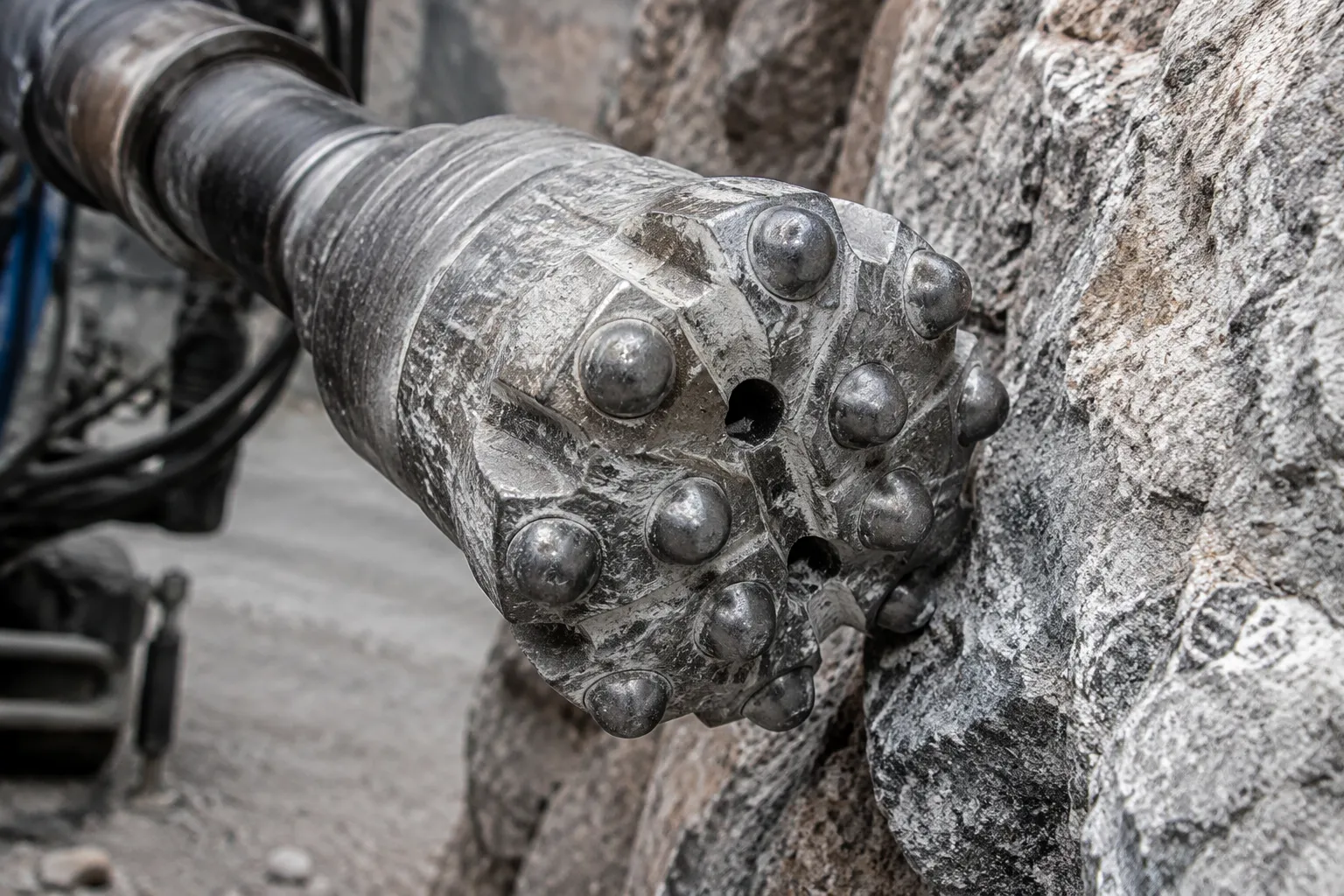
Hard, rough ground is tough on cutting tools. Granite and quartzite wear down soft metal quickly. International Drillers Supply says rough rock needs a harder carbide grade that resists wear better. Smaller carbide grains and less cobalt make a harder tip that fights abrasion. That harder grade is more brittle, so it can chip under heavy impact. Broken or blocky ground needs a tougher grade instead. Tungsten Man notes that carbide grades differ mainly by cobalt content and particle size. Less cobalt raises hardness. Smaller particles raise strength and wear resistance. No single grade works best everywhere. The right choice depends on the drilling job.
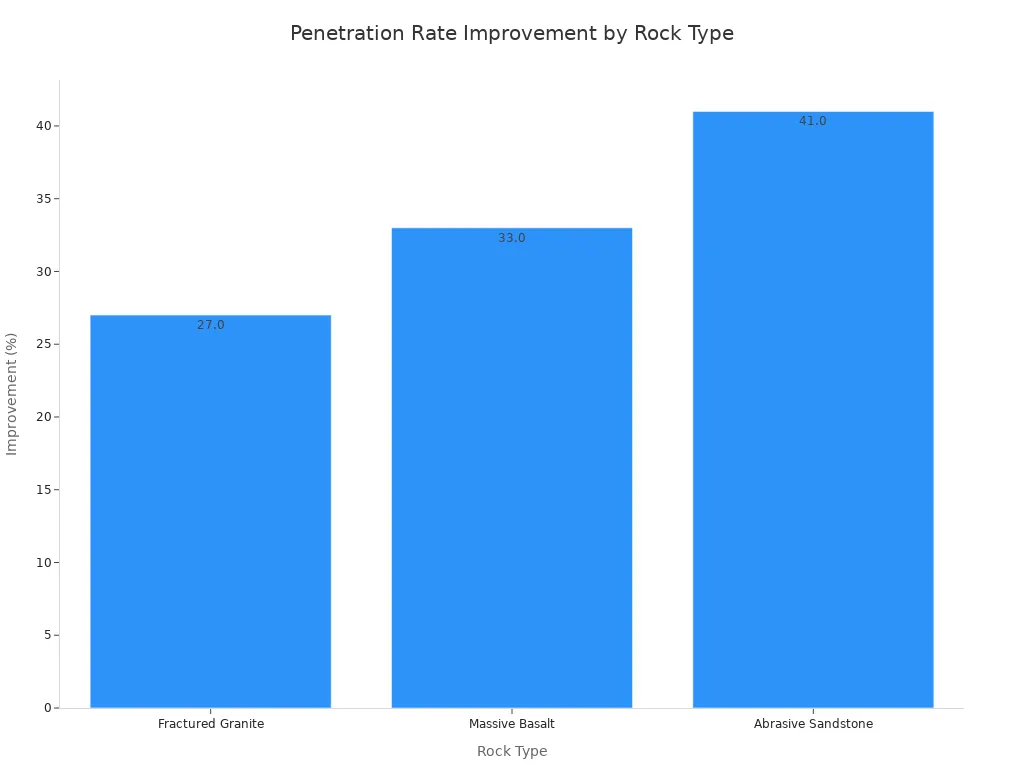
Shank shape matters just as much. Rock-drillbits.com reports that the shank outside diameter must match the chuck bore exactly. A shank that is too small creates side-to-side play, and that play causes hole deviation and faster spline wear. A loose spline-to-chuck fit also soaks up part of each impact pulse as deformation energy. A tight fit sends more energy into the rock. Field data from zjxinyukaishan.com shows how bit features raise penetration rates across rock types:
Rock Type | Recommended Bit Features | Penetration Rate Improvement |
|---|---|---|
Fractured Granite | 13mm concave buttons, 6-port asymmetric flow | 27% vs flat-face designs |
Massive Basalt | 16mm spherical buttons, turbo-flush channels | 33% vs standard geometries |
Abrasive Sandstone | Dual-hardness inserts, chrome-nitride coating | 41% wear resistance boost |
Keeping the tip locked in place completes the picture. A brazed joint must hold the carbide against repeated shock. A loose tip wastes power and can damage the holder.
Performance Benefits
These features add up to aggressive cutting. A sharp conical tip starts fractures with less force, so the bit bites faster. Wear-resistant carbide keeps that edge longer. The result is fast drilling and a long service life, even in dense soil and rock. Replacement stays quick and simple. Operators pull a worn tooth and press in a fresh one, so downtime stays short. That speed adds up to good value per meter drilled.
Premium round shank chisels from Changzhou Renewal Machinery build on these principles. The company uses 100% virgin tungsten carbide for the tips, alloy steel for the bodies, and copper brazing for the joint. Production runs under ISO9001 with strict inspection. Standard and customized designs are available based on samples and drawings. The B47K22H/60 model carries a 60mm body shank for high-torque foundation drilling. Changzhou Renewal Machinery lists high wear resistance, long service life, and convenient replacement as its core advantages. These rock drilling bullet teeth handle medium-hard rock and concrete alike.
The replaceable design offers a practical edge over welded cutting edges. A welded edge stays fixed until repair. A round shank chisel swaps out in minutes. Welded options still suit some setups, yet replaceable teeth keep crews drilling with less interruption.
Comparing Shank and Chisel Types
Round Shank vs. Other Styles
Each tool family has a job it does well. Round shank bullet teeth drive rotary drilling in hard rock and abrasive formations. The conical carbide tip concentrates force and starts fractures in dense ground. Chisel rock drill bits serve a different role. Litech Tools reports that chisel bits work best in low-hardness rock and in holes smaller than 50mm.
Parameter | Range |
|---|---|
Rock hardness | Low hardness |
Hole diameter | Less than 50mm |
Rock-drillbits.com notes that crews run chisel bits in soft rock, concrete, and masonry with handheld pneumatic drills. The same source states that chisel bits do not suit hard rock or deep-hole drilling. Other shank styles each have their own best-fit conditions. A style built for one drilling method rarely matches another method's demands. The right question is not which type wins. The right question is which type fits the ground, the rig, and the hole.
Matching Tool to Job
Start with the drilling method. Rotary rigs pair with round shank chisels. Handheld pneumatic drills pair with chisel bits. Then check rock hardness and hole diameter against the tool's design range. A tool pushed outside its range wears faster and cuts slower.
Cost deserves a wider view than the purchase price. ZY Diamond Tools explains that judging by initial price alone misleads, because it ignores tool life, cutting speed, and part quality. A longer-lasting tool means fewer purchases and fewer changes, and fewer changes mean less machine downtime. That source frames total cost of ownership around purchase price, tool life, changeover time, labor rate, downtime, and scrap. A higher-priced Rock Drilling Bullet Teeth may still cost less per meter drilled when it lasts longer and swaps faster. Crews can compare options by running both under similar conditions and tracking the same cost factors for each.
Selection, Use, and Maintenance
Choosing the Right Tooth
Rock hardness and abrasiveness guide the first choice. FES-CN publishes a model chart that matches carbide tip size with ground conditions. The B47K17.5 tip works for shale, marl, and soft sandstone above 45MPa. The B47K22H tip handles conglomerate, limestone, and tuff up to 70MPa. The B47K30H tip covers harder formations up to 120MPa. A buyer reads the ground report first, then picks the model that fits it.
Model | Carbide Size (diameter × height) | Recommended Ground |
|---|---|---|
B47K17.5 | 17.5 × 24 mm | Shale, marl, soft sandstone |
B47K22H | 22 × 27 mm | Conglomerate, limestone, tuff |
B47K30H | 30 × 30 mm | Harder rock up to 120MPa |
Abrasiveness should get equal weight. Wescoz notes that quartz-rich rock grinds carbide badly, and granite and basalt wear teeth very fast. Yiju Machinery suggests a premium carbide grade for highly abrasive rock and a reinforced tip for mixed ground. The drilling method and hole diameter make the list shorter. Rotary rigs use round shank chisels, and percussion drills use chisel bits. A tooth used outside its design range wears faster and cuts slower.
Wear and Replacement
Proper mounting protects the tool. The shank must sit fully in the holder with no play. Operators check tip retention at each shift. A loose braze joint wastes power and can damage the holder. They also check the shank for cracks and wear. Misuse shortens tool life. Running a dull tooth at high speed adds heat, and Wescoz reports that heat lowers carbide strength over time.
Rockway lists the visual signs of a worn tip. The carbide becomes shorter, rounded, or uneven. Cracks, chips, or missing carbide sections mean you should replace it right away. A broken tip exposes the steel body to fast wear. Operators swap a worn Rock Drilling Bullet Teeth in minutes, so downtime stays short. Customized designs are still available for non-standard needs.
Rock Drilling Bullet Teeth are cutting tools you can replace. A cone-shaped carbide tip pushes force into one small spot. That point loading starts cracks in hard, rough ground. The round shank keeps the tooth steady in the holder and sends more energy into the rock. Premium round shank chisels reward this design with strong cutting and long wear life. Selection starts with rock hardness, abrasiveness, drilling method, and hole diameter. Operators then check tip retention and shank condition, and they replace worn teeth before cutting speed drops. The practical takeaway is simple. Match tool specifications to the actual rock conditions, the drilling method, and the equipment on site.
FAQ
What makes a bullet tooth different from a welded cutting edge?
A bullet tooth is a replaceable part. The operator pulls a worn tooth and presses in a fresh one. A welded cutting edge stays fixed until repair. This difference keeps downtime short on foundation, mining, and tunneling jobs.
Which rock types do round shank chisels handle best?
Round shank chisels suit hard rock and abrasive formations. The conical carbide tip concentrates force and starts fractures in dense ground. Model charts match tip size to ground strength. The B47K30H tip covers harder formations up to 120MPa.
How does an operator know when to replace a tooth?
The carbide becomes shorter, rounded, or uneven. Cracks, chips, or missing carbide sections call for immediate replacement. A broken tip exposes the steel body to fast wear. Operators also replace teeth when cutting speed drops.
Do chisel rock drill bits work in hard rock?
No. Chisel bits fit low-hardness rock and holes smaller than 50mm. Crews run them in soft rock, concrete, and masonry with handheld pneumatic drills. Hard rock and deep-hole work call for round shank bullet teeth instead.
Can buyers order custom tooth designs?
Yes. Changzhou Renewal Machinery offers customized designs based on samples and drawings. Standard models cover common ground conditions. A custom design serves non-standard needs. Production runs under ISO9001 with strict inspection.

