


How to Choose Auger Teeth for Hard Rock: B47K22H vs C31HD Explained
The B47K22H is generally the stronger pick for hard rock. The C31HD is a versatile tooth better suited to clay, sand, and loose soil. The right choice depends on ground conditions.
Many buyers treat these two auger teeth as direct hard-rock rivals. That view misses the point. Each tooth has a distinct design intent, and a fit-based comparison serves buyers better than a head-to-head contest.
Tooth choice affects penetration rate, change-out frequency, and cost per foot. Crews who choose auger teeth for hard rock with the wrong profile pay for it in downtime and slow drilling. This guide compares both options by application, so readers can match tooth to rock, soil, and drilling method.
Key Takeaways
Match the tooth to the ground: B47K22H for hard rock, C31HD for soft soil.
The B47K22H gives strength and impact resistance in tough rock.
The C31HD offers speed and lower cost in clay, sand, and loose soil.
Check supplier quality: look for ISO9001 and a yield rate above 98%.
Compare cost per foot, not just price per tooth, to save money.
B47K22H vs C31HD: Key Specs
The B47K22H and the C31HD are both bullet-style teeth with carbide tips. A carbide tip puts hard material right where it touches the ground. This design lets rock auger teeth cut rough ground without getting dull as fast as an all-steel edge. Carbide tips are now standard for rock augers because they stay sharp under repeated impact.
Renewal makes both profiles with 100% virgin tungsten carbide tips and alloy steel bodies. Copper brazing joins the tip to the body, and CNC machining plus heat treatment give a precise fit. These steps matter for wear-resistant teeth, because a loose tip or a bad shank fit shortens how long they last. Buyers can ask suppliers to verify ISO9001 quality control and a yield rate above 98%. Both numbers give a clear checkpoint for comparing sources.
B47K22H Bullet Tooth Profile
The B47K22H has a heavier body and a strong carbide tip. Its shape favors strength over fine cutting. The mass behind the tip soaks up impact energy, which suits steady work in medium-hard to extremely hard rock. This profile is part of the rock-cutting teeth class, where durability matters more than speed in soft ground.
C31HD Bullet Tooth Profile
The C31HD uses a slimmer bullet shape with a sharper carbide design. It gives up some mass for easier penetration in soft, loose ground. Crews often run these bullet teeth for augers in clay, sand, and loose soil. The lighter profile also keeps cost per tooth lower, which helps on jobs where teeth wear mainly from rubbing rather than impact.
Feature | B47K22H | C31HD |
|---|---|---|
Style | Heavy bullet tooth | Slim bullet tooth |
Best ground | Medium-hard to extremely hard rock | Clay, sand, loose soil |
Strength focus | Impact resistance | Penetration and cost |
Tip material | Virgin tungsten carbide | Virgin tungsten carbide |
Performance in Rock: Hardness and Wear
Wear Resistance and Impact Strength
Most early tooth failure does not come from the tooth by itself. Three habits cause most of it: crews do not replace worn teeth on time, the tooth stops turning in its holder, and dirt and rock chips collect around the teeth. A stuck tooth wears on just one side. Packed debris grinds down the tip and the holder at the same time. Both problems cut tooth life shorter than hard rock does. Good wear resistance begins with good operating habits.
The B47K22H and the C31HD meet different needs. The B47K22H has more mass behind the carbide tip, so its impact resistance works well in hard, broken ground. The C31HD gives up some of that mass for a sharper shape. Its wear resistance holds up well in soft ground, where rubbing, not impact, causes most tooth wear. Neither design is worse than the other. Each one fits a different set of ground conditions.
Penetration Rate Factors
Penetration rate depends on more than the tip. Rock hardness, how abrasive the formation is, and machine thrust all affect how fast a tooth moves forward. Abrasive formations dull the carbide fast, and a dull tip slows rock penetration. Harder formations need a strong body that resists breaking under load.
The C31HD moves through clay and sand with less resistance, which keeps cycle times short in soft ground. The B47K22H gives up a little speed in exchange for strength in rock. Operators who track penetration rate against ground conditions can spot the right time to swap in replacement teeth. Fresh wear-resistant teeth cut faster than worn ones, and that gain often outweighs any price difference. Letting teeth rotate freely and clearing debris around the holder protects both the tooth and the holder wear surfaces. Together, these habits turn any wear-resistant cutting components into a longer-lasting investment.
Application Fit: Rock, Soil, and CFA Auger Work
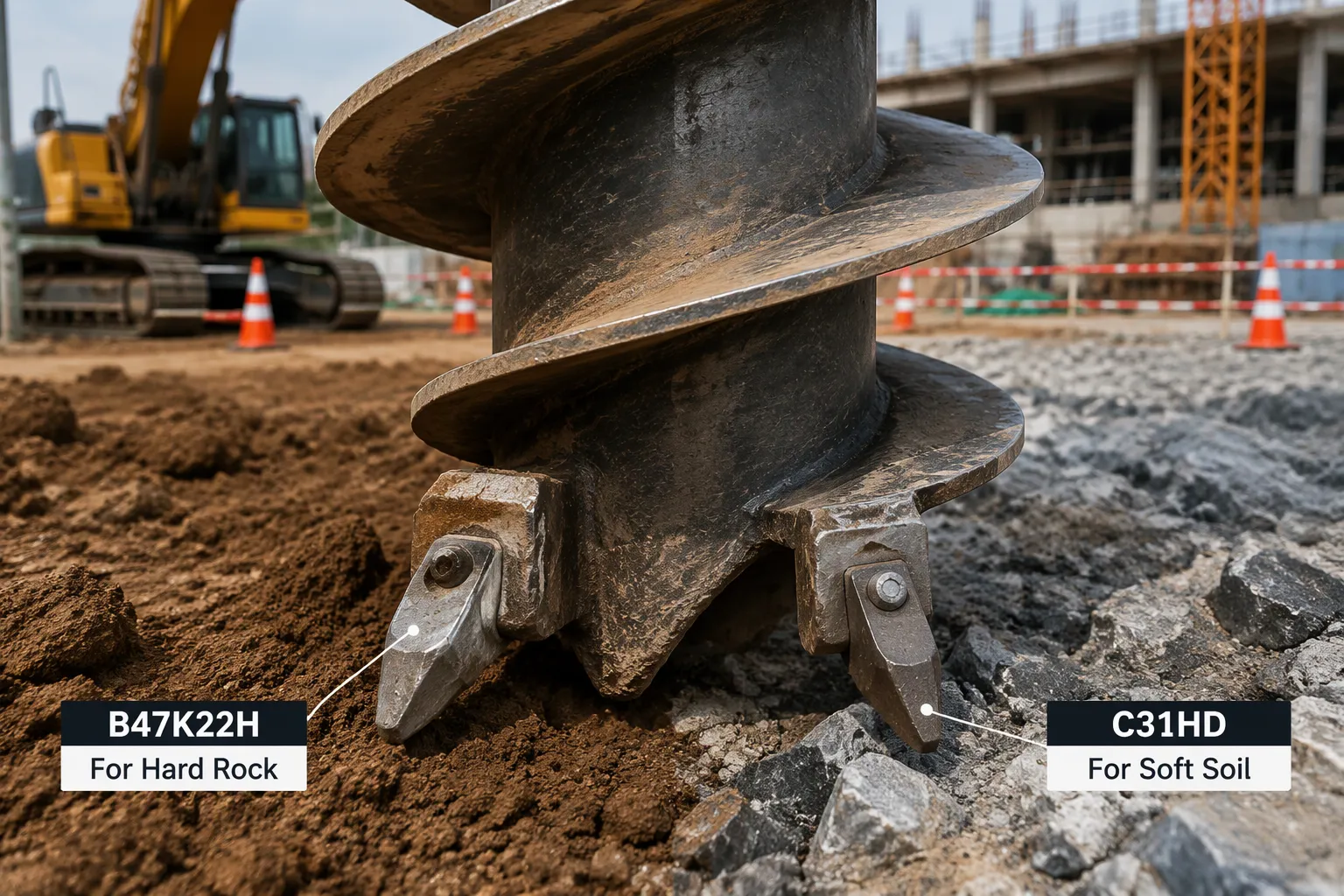
Ground conditions drive the decision more than any spec sheet. A tooth that excels in one formation can slow a crew in another. Smart cfa auger selection starts with reading the site, then matching the tooth to the job.
B47K22H for Medium-Hard to Extremely Hard Rock
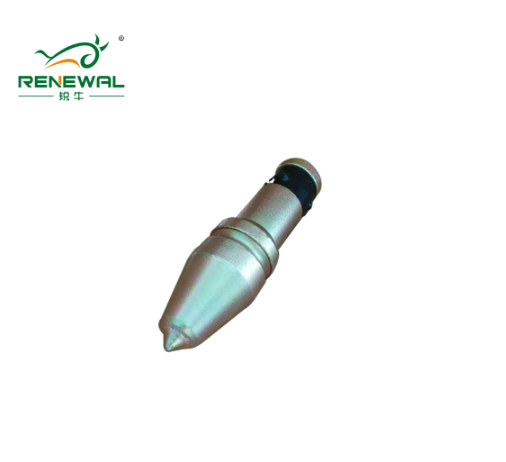
The B47K22H earns its place in medium-hard to extremely hard rock. Its heavy body resists impact when the bit strikes fractured stone. Crews drilling in harder formations value that strength, because a broken tooth stops the whole string. The B47K22H also holds up in abrasive rock, where the carbide tip wears slowly under constant scraping. For continuous flight auger work in stone, this tooth keeps penetration steady and change-outs rare.
C31HD for Clay, Sand, and Loose Soil
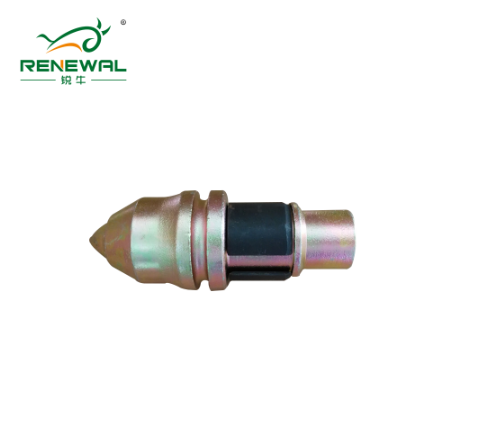
The C31HD fits clay, sand, and loose soil. Its slim profile slices through soft ground with less resistance. That speed matters on cfa auger jobs where crews chase production, not durability. The C31HD also costs less per tooth, which suits sites where soil abrasiveness stays low. On a continuous flight auger running through sand, this tooth configuration keeps the flighting clear and the cycle short.
Some augers convert between dirt and rock duty by switching tooth and pilot combinations. A continuous flight auger crew can run the C31HD in soil, then swap to the B47K22H when the bit reaches stone. This flexibility extends one rig's range across a mixed site. The B47K17.5 serves as a bridge option for mixed soil and soft-to-medium formations. It sits between the two extremes and handles transitions without a full change-out.
Matching tooth to ground conditions, drilling method, and equipment type decides the outcome. A cfa auger drilling through layered ground needs a tooth configuration that adapts. Operators should log what each cfa auger encounters and adjust the tooth lineup as the bore deepens. Rock at the tip calls for the B47K22H. Loose soil above it favors the C31HD. This layered approach keeps cfa drilling efficient from top to bottom.
The same logic applies across a fleet. A contractor running several rigs can stock both profiles and assign auger teeth by site. One crew on a continuous flight auger in soft clay runs the C31HD. Another crew on a cfa auger in hard rock runs the B47K22H. Each machine then works at its best, and no crew fights ground conditions with the wrong tool.
Compliance and Quality Checks
Certifications to Verify Before Buying
A certification claim means little until a buyer checks it. ISO9001 is the first item to confirm. This standard shows that a supplier runs a documented quality control system. Buyers should ask for the certificate and check that it covers the actual production site. A certificate for a trading office tells a buyer nothing about the factory floor. Renewal runs a strict ISO9001 quality control system across its wear parts production, and buyers can request proof before placing an order.
Yield rate is the second checkpoint. Yield rate = good units / total units x 100. A supplier with a high yield rate rejects fewer defective teeth before shipment. Renewal guarantees a yield rate above 98%, which gives buyers a clear number to compare against other quotes. Buyers should ask how the supplier measures this figure and whether it covers finished teeth or raw castings only. A supplier who answers these questions with records earns more trust than one who offers a slogan.
Carbide grade deserves a direct question. Both the B47K22H and the C31HD use 100% virgin tungsten carbide tips. Buyers should ask for the carbide grade and request a sample for inspection. Virgin carbide shows a consistent grain structure, and a buyer can compare samples from two suppliers side by side.
Brazing quality decides whether the tip stays in place. Copper brazing joins the tip to the alloy steel body, and a poor joint fails early under impact. Buyers can inspect a sample for voids along the joint line and ask about the brazing process. CNC machining and heat treatment complete the picture, because these steps control shank fit and body strength. A supplier who explains each step with records gives buyers a solid basis for comparison.
Cost Analysis for CFA Drilling
Price vs. Total Cost of Ownership
A low shelf price rarely tells the full story in cfa drilling. Buyers should weigh upfront cost against lifespan and cost per foot. A tooth that lasts longer can cost less per foot even when it costs more per piece. Crews on a cfa auger should track how many feet each set of teeth completes before replacement. That figure turns a price tag into a real comparison.
Change-out downtime is the hidden cost in cfa drilling. Every stop to swap teeth halts the pour and idles the crew. A tooth that wears out early forces more stops across a shift. The B47K22H resists impact in hard rock, so it holds up longer where breakage drives tooth wear. The C31HD costs less per piece and suits soft ground, where abrasiveness stays low. Matching each profile to ground conditions protects tooth life and keeps the rig turning.
A continuous flight auger crew should also count the labor tied to each change. Fast swaps help, yet fewer swaps help more. The right tooth on a continuous flight auger cuts both the parts bill and the downtime bill. A continuous flight auger running the wrong profile pays twice: once at purchase and again at every stop.
Renewal offers a customization service for buyers who need a tailored fit. Customers can send samples or drawings, and the team builds teeth to match. This option helps crews whose cfa auger runs mixed ground or an unusual holder size. A tailored fit reduces slop in the holder, and a tight fit supports steady rotation. Buyers who compare quotes should ask for cost per foot, not just price per tooth. That shift in view exposes the true cost of any cfa auger tooth.
How to Choose Auger Teeth for Hard Rock
Scenario-Based Recommendations
Site conditions tell a crew which tooth to run. A team drilling solid granite with a continuous flight auger needs the B47K22H. Its heavy body absorbs impact, and the carbide tip holds its edge in abrasive stone. Crews working softer ground should reach for the C31HD instead. This tooth slices through clay and sand with less drag, and it keeps cycle times short on a cfa auger.
Mixed ground demands a layered plan. A cfa auger boring through topsoil and then into rock should start with the C31HD and switch to the B47K22H at the rock line. The B47K17.5 covers the transition zone where soil gives way to soft-to-medium formations. Crews who log ground conditions as the bore deepens can plan each tooth change in advance. This habit removes guesswork from the job.
A contractor running several rigs should stock both profiles. One continuous flight auger on a soft-clay site runs the C31HD. Another cfa auger in harder formations runs the B47K22H. Each machine then works at its best. No crew fights the ground with the wrong tool.
Weather and site access also shape the choice. A cfa auger working in wet, loose sand needs a tooth configuration that clears spoil fast. The C31HD suits that job. A continuous flight auger cutting dry, fractured rock needs impact strength. The B47K22H fits that case. Operators who match tooth configuration to daily ground conditions report fewer stops and steadier penetration rate.
Quick Selection Checklist
Buyers can run through a short checklist before placing an order. Each question points to one profile or the other.
Question | B47K22H | C31HD |
|---|---|---|
Is the ground medium-hard to extremely hard rock? | Yes | No |
Is the ground clay, sand, or loose soil? | No | Yes |
Does impact breakage drive tooth wear? | Yes | No |
Does low abrasiveness keep wear mild? | No | Yes |
Does the job need the lowest cost per tooth? | No | Yes |
Does the job need maximum impact resistance? | Yes | No |
A crew that answers mostly in the left column should choose the B47K22H. A crew that answers mostly in the right column should choose the C31HD. Mixed answers point to the B47K17.5 or a switchable tooth plan. Buyers who choose auger teeth for hard rock with this checklist avoid the common mistake of buying on price alone. They also gain a clear record of why each tooth went to each site.
The final step is a conversation with the supplier. Crews should share job details: ground type, drilling method, rig model, and expected footage. A supplier who knows these facts can confirm the choice and flag any fit issue. Buyers who choose auger teeth for hard rock this way get a tooth that matches the job, not a guess. That approach pays off in cfa drilling through fewer change-outs and steadier production.
The B47K22H suits sustained medium-hard to extremely hard rock. The C31HD fits clay, sand, and loose soil, where versatility and cost matter more than impact strength. Neither tooth wins everywhere.
Matching tooth to ground conditions and drilling method drives the best result. Price alone misleads. Ground conditions shift as the bore deepens, so crews should log each change.
To choose auger teeth for hard rock, start with the B47K22H and confirm the fit with a supplier. Share job details: ground type, rig model, and expected footage. A supplier who knows these facts can confirm the choice and flag any fit issue.
FAQ
Which tooth suits a mixed site with soil on top and stone below?
A crew can start with the C31HD in the soil and switch to the B47K22H at the rock line. The B47K17.5 covers the transition zone. Logging ground conditions as the bore deepens lets crews plan each change in advance.
Do both teeth use the same tip material?
Yes. Both the B47K22H and the C31HD use 100% virgin tungsten carbide tips on alloy steel bodies. Copper brazing joins the tip to the body. CNC machining and heat treatment control shank fit and body strength.
How can a buyer check supplier quality before ordering?
Ask for the ISO9001 certificate and confirm it covers the production site. Request the yield rate figure and how the supplier measures it. Ask for the carbide grade and inspect a sample for voids along the brazing joint.
Can a supplier build teeth for an unusual holder size?
Renewal offers a customization service. Customers can send samples or drawings, and the team builds teeth to match. A tailored fit reduces slop in the holder and supports steady rotation.
Is a lower price per tooth always the cheaper choice?
No. Buyers should compare cost per foot instead. A tooth that lasts longer can cost less per foot even at a higher piece price. Change-out downtime adds a hidden cost that a low shelf price does not show.

