


Forestry mulcher teeth help you cut through thick vegetation quickly. You need to pick the right teeth for your mulcher to get the best results. Different designs and materials work best for certain jobs or terrains.
Carbide hammers last longer and need little care, which makes them great for rocky ground.
Forged knives stay sharp and give clean cuts, but you must check them often because they wear down fast.
Think about your project and choose teeth that match your land and job needs.
Key Takeaways
Pick carbide teeth if the ground has lots of rocks. They last a long time and need less fixing. This makes them good for hard jobs.
Use forged knives when you want neat cuts and small mulch. They work well for cutting brush but need sharpening often.
Always choose the right tooth type for your job and land. This helps your mulcher work better and last longer.
Check your forestry mulcher teeth often and keep them clean. Clean them after you use them. Replace any teeth that look worn or broken so your mulcher does not break down.
Think about cost and how well the teeth work. Buying good teeth can save you money later. You will not need to replace them as much and your work will be faster.
Forestry Mulcher Teeth Types
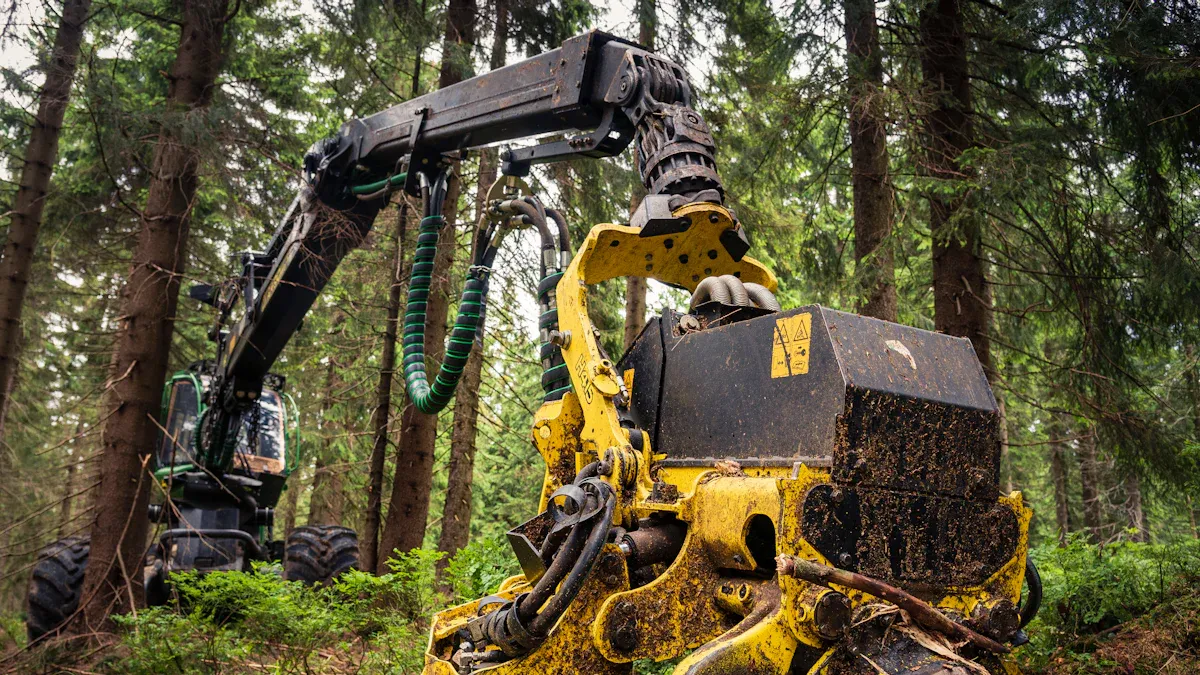
Picking the right forestry mulcher teeth helps you do a better job. There are different types of teeth for different tasks and places. The material of the tooth changes how long it lasts and how well it cuts.
Carbide Teeth
Carbide teeth are very strong. You can use them on rocky or rough ground. They are good for thick brush and hardwood trees. Carbide hammers do not break or wear out fast. You do not need to fix them often. These teeth stay sharp for a long time. This means you can cut well for many hours. Some carbide teeth, like the Diamond Twin Maul, last 200 to 500 hours in big jobs. You do not have to stop often to change or sharpen them.
Tip: If you clear land a lot or work in tough places, carbide teeth help you finish faster and save money.
Carbide teeth are best for hard mulching jobs.
They stay sharp longer.
You do not need to fix them as much.
Steel Teeth
Steel teeth are a good and cheap choice for easy jobs. You can use steel teeth for small trees and light brush. They work best on soft ground. Steel teeth wear out faster on hard ground. You will need to sharpen or change them more. They cut well if you do not use them often. You should check them often to keep your mulcher working.
Steel teeth last a medium amount of time.
You need to sharpen and fix them a lot.
They cost less at first but may cost more later.
Other Materials
Some forestry mulcher teeth use new materials or special shapes. Forged knives cut very well and make fine mulch. These teeth are good when you want a neat job. New technology makes mulcher teeth last longer and work better. Companies use better materials and shapes to help you work safer and make more money.
Note: Knowing how each tooth works helps you pick the best one for your job.
Forged knives are great for neat cutting.
New shapes and materials help teeth cut better.
Machines and smart tools make work safer and faster.
You should pick the tooth material that fits your job and land. The right teeth help your mulcher last longer and work better.
Mulcher Teeth Applications
Land Clearing
You need strong forestry mulcher teeth for land clearing. These teeth break down trees and thick brush quickly. You can clear large areas with less effort. Carbide teeth work well for tough jobs because they last longer. Steel teeth help with lighter tasks. When you use the right mulcher teeth, you save time and keep your machine running smoothly.
Tip: Choose teeth that match the size and type of trees on your land. This helps you finish land clearing faster and keeps your mulcher in good shape.
Brush Management
Mulcher teeth help you control brush and small plants. You can use them to keep trails clear or manage overgrown fields. Forged knives make fine mulch, which helps with vegetation management. You get cleaner results when you pick teeth designed for brush. Regular checks and sharpening keep your mulcher working well.
Use forged knives for neat brush cutting.
Check teeth often to avoid slowdowns.
Mulching brush helps keep land healthy.
Stump Grinding
Stump grinding needs tough mulcher teeth. Carbide teeth break down hard stumps into small pieces. You can remove old stumps without damaging your mulcher. This makes the ground ready for new plants or building. Stump grinding also stops pests from living in old wood.
| Task | Best Teeth Type | Benefit |
|---|---|---|
| Stump Grinding | Carbide | Breaks hard stumps |
| Land Clearing | Carbide/Steel | Clears large areas |
| Brush Cutting | Forged Knives | Makes fine mulch |
Forestry Work
Forestry mulcher teeth play a big role in forestry work. You use them to break down trees, stumps, and brush into fine mulch. The design and material of the teeth affect how well you manage forests. Good mulcher teeth help you keep forests healthy and safe.
Mulcher teeth break down tough vegetation.
You get better results with the right design.
Forestry work needs strong and sharp teeth.
Note: The cutting mechanism of a mulcher is the heart of the machine. Teeth and blades break down vegetation and turn it into mulch. You get better performance when you match teeth to your job.
Choosing Mulcher Teeth
Job Type
You need to pick the right forestry mulcher teeth for your job. Every job needs different teeth. If you work on rocky ground, use carbide teeth. Carbide teeth handle hard hits and last longer. For soil and light brush, use carbide teeth or knives. These choices save money for easy jobs. Thick trees and dense plants need forged knives. Forged knives cut better and control chip size. If your land has mixed terrain, use both types. Mixing teeth helps you save money and keeps your mulcher working well.
| Terrain Type | Recommended Teeth Type | Reason for Selection |
|---|---|---|
| Rocky or Hard Ground | Carbide teeth | Handle impact and wear effectively. |
| Soil contact & Light Brush | Carbide teeth or Knives | Cost-effective for less demanding applications. |
| Dense Vegetation & Thick Trees | Forged knives | Better cutting performance and chip size. |
| Mixed Terrain | Combination of both types | Balances cost and effectiveness while maintaining rotor balance. |
Tip: Always look at your land and job before picking teeth. The right teeth help you finish faster and work safer.
Machine Compatibility
Your mulcher works best with teeth that fit your machine. Not all teeth work with every mulcher. Check your manual or ask the maker for help. Wrong teeth can break your machine or make it work badly. Some mulchers need a certain number of teeth to stay balanced. If you use both carbide and forged knives, use equal numbers on each side. This stops shaking and loud noise. Balanced rotors help you work safely and avoid repairs.
| Type of Teeth | Key Advantages | Safety Considerations |
|---|---|---|
| Carbide Hammers | Extremely durable, low maintenance, handles tough jobs | Ideal for rocky, abrasive terrain; withstands repeated impacts, reducing risk of breakage. |
| Forged Knives | Fast, efficient cutting, ideal for wood and brush, leaves a fine mulch | Requires regular sharpening; may wear down faster, necessitating more frequent checks. |
| Mixed Use | Balances cost and effectiveness by combining both types | Ensure equal numbers to maintain rotor balance, preventing excessive vibration or noise. |
Note: Always follow safety rules when changing or mixing teeth. Balanced teeth keep your mulcher safe and working well.
Durability & Maintenance
How long your forestry mulcher teeth last depends on care and strength. Carbide teeth last longer and need less fixing. Forged knives cut sharp and clean but wear out faster. You need to check and sharpen them more. Regular care keeps your mulcher working and saves money.
Clean teeth after every use.
Look for damage or wear.
Change broken or worn teeth right away.
Check teeth before and after each job.
Keep teeth sharp for best cutting.
Worn teeth, like old carbide hammers, need more power and time. This uses more fuel and costs more money. Sharp teeth, like forged knives, cut faster and save fuel. Change all teeth every two years to keep your mulcher working well. This helps you avoid breakdowns during busy jobs.
Tip: Good care helps teeth last longer and keeps your mulcher ready for work.
Cost vs. Performance
You want forestry mulcher teeth that give you good value. Cheap teeth can cost more over time. For example, a $30 tooth lasts 100 hours, so it costs $0.30 per hour. A $15 tooth lasts 40 hours, so it costs $0.375 per hour. Premium teeth, like YK20 carbide grade, last much longer than regular teeth. These teeth stay sharp for 80 to 100 hours.
| Tooth Cost | Lifespan (Hours) | Cost per Hour |
|---|---|---|
| $30 | 100 | $0.30 |
| $15 | 40 | $0.375 |
Premium teeth save money over time.
Carbide teeth last longer and need fewer changes.
Forged knives work well for busy jobs but need more care.
Worn teeth use more fuel because your mulcher works harder. Sharp teeth save fuel and help you finish faster. Think about the cost to change all teeth. For example, changing 32 teeth at $55 each costs $1,760. This is a lot of money, but it keeps your mulcher working its best.
Note: Pick teeth that give you the best mix of cost, strength, and performance for your job.
Selection Guide
Assess Requirements
You need to look at several factors before you choose forestry mulcher teeth for your project. Start by checking the terrain type. Carbide teeth work best in rocky or abrasive areas. Steel teeth handle most vegetation. Think about how often you use your mulcher. Carbide teeth last longer if you use your machine a lot. Steel teeth cost less and suit quick jobs. Your budget matters. Carbide teeth cost more at first but save money over time. Steel teeth help if you want a lower upfront cost. Make sure the tooth fits your mulching head. Always check your manual for the right size and type. Look at the mounting system and the shape of the mounting holes to make sure new teeth fit well.
Terrain type
Frequency of use
Budget
Machine compatibility
Mounting system and hole shape
Match Teeth to Task
You must match the tooth type to your cutting job and terrain. Edge hardened steel teeth cut fast in clean, low-impact soils. Twin chisel planer teeth work well for high-volume mulching in soft soils and process small trees. Twin maul carbide teeth suit rocky ground and dense wood. Four-point hardened steel teeth make finer mulch in soft soils and help with fibrous plants. Armored maul carbide teeth last longer in harsh environments and resist wear. Pick the tooth that fits your cutting needs and the type of land you work on.
Edge hardened steel teeth: Fast cutting in clean soils
Twin chisel planer teeth: High-volume mulching, small trees
Twin maul carbide teeth: Rocky terrain, dense wood
Four-point hardened steel teeth: Fine mulch, fibrous species
Armored maul carbide teeth: Durability in harsh conditions
Manufacturer Advice
Manufacturers give clear advice for choosing mulcher teeth. Carbide hammers work best for rocky or hard ground. Carbide teeth suit soil contact and light brush. Forged knives help with thick trees and dense vegetation. You can use a mix of carbide teeth on the outer edges and forged knives in the center for mixed terrain. This setup improves cutting and mulching performance.
Carbide hammers: Rocky ground
Carbide teeth: Soil and brush
Forged knives: Dense vegetation
Combination use: Mixed terrain
Maintenance Tips
Regular care keeps your forestry mulcher teeth working well. Inspect your teeth often because cutting wears them down. Four-point hardened steel teeth can be sharpened or rotated. Twin chisel planer teeth let you sharpen them while mounted. Twin maul carbide teeth need replacement only when worn or damaged. Follow routine maintenance to avoid downtime. Use high-quality replacement teeth for better results.
| Maintenance Tip | Description |
|---|---|
| Install teeth securely | Follow torque specs for proper installation. |
| Regular checks | Inspect for loose, damaged, or missing teeth. |
| Rotate teeth | Rotate for even wear and longer life. |
| Replace worn-out teeth | Change teeth as needed for best cutting. |
| Sharpen forged knives | Sharpen often for efficient cutting. |
| Avoid hard surfaces | Keep teeth away from rocks to prevent damage. |
| Clean mulcher head | Clean after each use to stop debris buildup. |
| Use high-quality replacements | Choose trusted suppliers for replacement teeth. |
Tip: Good maintenance helps your mulching job stay safe and efficient.
Picking the right forestry mulcher teeth helps you do a better job. It also helps your equipment last longer. Before you choose, think about a few things. First, know what you want to do and what plants you need to cut. Next, check if your machine is strong enough and has good safety parts. Also, think about how easy it is to fix and find new parts.
If you ask manufacturers for help, you get extra benefits:
| Benefit | Description |
|---|---|
| Quality Assurance | Good tools use tough materials. |
| Cost-Effectiveness | You can save money with other brands. |
| Customization | Some tools fit your special needs. |
| Productivity | Good teeth help your machine work faster. |
| Availability | It is easy to find parts. |
| Longevity | Some teeth last longer and need fewer changes. |
The right forestry mulcher teeth help you work safer and faster. They also help you save money.
FAQ
What type of mulcher teeth should you use for rocky ground?
You should use carbide teeth for rocky ground. These teeth resist wear and last longer. Carbide teeth help you avoid frequent replacements and keep your mulcher working well.
How often should you check or replace mulcher teeth?
Check your mulcher teeth before and after each job. Replace any teeth that look worn, broken, or dull. Regular checks help you avoid breakdowns and keep your machine safe.
Can you mix different types of mulcher teeth on one machine?
You can mix teeth types, but you must balance them on both sides of the rotor. This helps your mulcher run smoothly and prevents shaking or damage.
What is the best way to maintain mulcher teeth?
Clean your teeth after every use. Inspect for damage or wear. Sharpen forged knives often. Replace broken or dull teeth right away. Good care helps your teeth last longer.
Do expensive mulcher teeth save money in the long run?
Expensive teeth, like carbide, last longer and need fewer changes. You spend less time and money on replacements. Over time, you save money and keep your mulcher working better.


