


Replacement teeth for cat drum mulcher
Replacement teeth keep your Cat drum mulcher working at its best. These parts face constant wear because they cut through tough vegetation every day. When you check and change worn teeth on time, you avoid unexpected breakdowns. You also help your mulcher run smoothly and lower your maintenance costs. Regular attention to these teeth means less downtime and better results. Always think about the needs of your specific Cat model and the kind of land you work on.
Key Takeaways
Check your Cat drum mulcher teeth often. Replace teeth when they are worn. This helps stop breakdowns. It also lowers maintenance costs.
Pick the best material for replacement teeth. Carbide lasts longer. It needs less maintenance. Steel costs less. Steel needs sharpening more often.
Match tooth shapes to your job and terrain. This helps your mulcher cut better. It also stops damage to your mulcher.
Make sure replacement teeth fit your Cat model. This keeps your mulcher safe and efficient.
Install and care for teeth the right way. This makes replacement teeth last longer. It also helps your mulcher work better.
Replacement teeth types
Materials and durability
You need strong materials for your Cat drum mulcher to work well. The two most common materials for replacement teeth are steel and carbide. Steel teeth use high-quality steel alloys. These teeth cut fast but need sharpening more often. Carbide teeth have tungsten carbide tips on a steel body. These teeth last longer and stay sharp for more hours. You can see the differences in the table below:
Material | Composition | Durability and Wear Resistance |
|---|---|---|
Steel | High-quality steel alloys | Requires regular sharpening; aggressive cutting action |
Carbide | Tungsten carbide tips on steel body | Superior durability; maintains sharpness longer |
If you want teeth that last longer and need less maintenance, choose carbide. If you want a lower cost and do not mind sharpening, steel can work for you.
Tooth shapes and compatibility
The shape of the tooth changes how your mulcher cuts. You must match the tooth shape to your job and your Cat model. Some teeth work best for soft wood and brush. Others handle rocks and hard timber. Here is a table that shows common tooth types and their uses:
Tooth Type | Application Description |
|---|---|
Standard | Most commonly used; produces a fairly fine final product where minimal rock is present. |
Rock Crushing | Suitable for applications with rocks; results in a larger final product. |
Bite Limiter | Produces a very fine final product; ideal for areas with minimal rocks and large timber. |
You can also find these shapes:
Standard Carbide
Rock Resistant
Chisel
Side Cutter
Always check your Cat drum mulcher manual. This helps you pick the right tooth shape for your machine and your land.
Tooth holders and installation
Tooth holders keep the replacement teeth in place on the drum. You must use holders that fit your Cat model. Some holders use bolts. Others use a quick-change system. The right holder makes it easy to swap out worn teeth. When you install new teeth, make sure they fit tight and line up with the drum. Loose teeth can break or fall out during work. Always follow the instructions from your equipment manual for safe and correct installation.
Tip: Check your tooth holders for wear when you change teeth. Worn holders can cause new teeth to wear out faster.
Choosing replacement teeth
Matching to Cat models
You need to match the right teeth to your Cat drum mulcher model. Each Cat model has its own drum size, tooth holder design, and cutting pattern. If you use the wrong teeth, you may damage your machine or reduce its performance. Always check your Cat mulcher’s manual before you buy new teeth. Look for the part number and tooth style that fits your equipment. You can also ask your dealer for help if you are not sure. Using the correct replacement teeth keeps your mulcher running smoothly and safely.
Application and terrain factors
You must think about the land and the job before you choose teeth. Different terrains and applications need different types of teeth. Here are some tips to help you decide:
Rocky or hard terrain: Choose carbide teeth. They last longer and resist chipping.
Soft soil and light brush: Steel teeth work well. They cut fast and cost less.
Dense vegetation and thick trees: Heavy-duty forestry teeth with reinforced edges give better results.
The type of terrain matters a lot. Rocky ground wears out teeth faster. Carbide teeth handle rocks and sand better than steel. If you work in soft soil, steel teeth give you sharp cuts and a smooth finish.
Here is a table to help you compare:
Soil Condition | Recommended Teeth | Key Features |
|---|---|---|
Rocky or Sandy | Carbide Teeth | Durable, no sharpening needed, high abrasion resistance |
Soft Soil | Steel Teeth | Sharper cuts, higher productivity, better finish |
Tip: Always check the land before you start. The right teeth save you time and money.
Cost and longevity
You want teeth that last long and fit your budget. The price of replacement teeth depends on the type and material. Carbide teeth cost more, but they last three to six times longer than steel teeth. Steel teeth cost less, but you may need to replace them more often.
Here is a table that shows how long each type lasts:
Type of Tooth | Longevity (compared to standard) |
|---|---|
Carbide Teeth | 3-6 times longer than steel |
Steel Teeth | Standard longevity |
You can buy teeth one by one or in boxes. Here are some common prices:
Product Description | Price Range |
|---|---|
Individual Scraper Tooth (Werewolf MSC-16HDSSL) | $160.00 |
Box of 12 Teeth (Werewolf MSC-1 Bolt – HD) | $1,140.00 |
Box of 12 Teeth (Werewolf MSC-3 BP Carbide) | $1,164.00 |
Box of 14 Teeth (Werewolf MSC-3 Duo Carbide) | $1,246.00 |
Box of 14 Teeth (Werewolf Version C SC Single Narrow Carbide) | $1,246.00 |
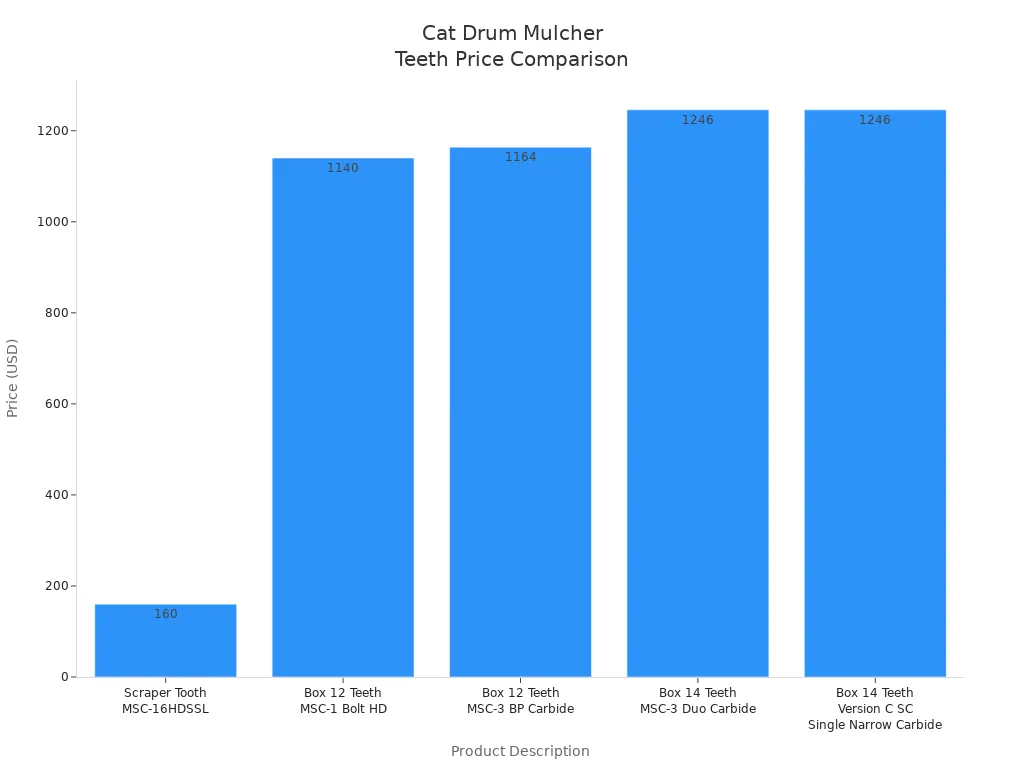
If you use your mulcher often or work in tough conditions, carbide teeth may save you money over time. They reduce downtime and last longer. If you work in soft soil or do light jobs, steel teeth may be enough.
Where to buy replacement teeth
Authorized dealers and online sources
You can get replacement teeth from authorized dealers. These dealers know your Cat drum mulcher well. They help you pick the right parts. Many Cat dealers sell parts online too. You can go to their websites and order what you need. Some trusted online stores also sell mulcher teeth. Always check the seller’s reviews and reputation before buying. This helps you avoid bad parts.
Tip: If you are not sure which teeth fit your Cat model, ask your dealer for help.
Changzhou Renewal Machinery Co., Ltd.
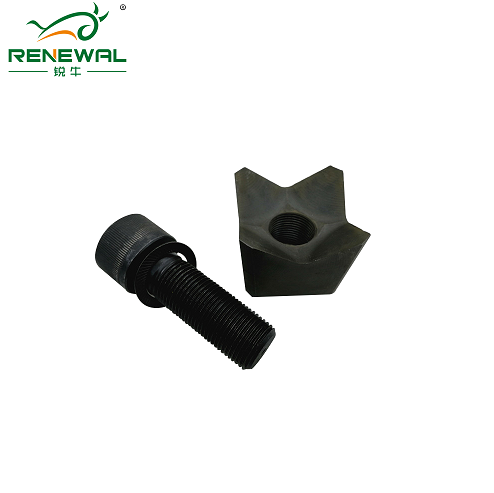
Changzhou Renewal Machinery Co., Ltd. is a reliable supplier. They offer high-quality wear parts for many jobs. You can trust their products for construction, mining, agriculture, and forestry. Their replacement teeth use strong materials like 100% virgin tungsten carbide and alloy steel. This means the teeth last longer in tough work.
The company follows strict quality rules. Every product gets checked before shipping. You can see their quality promise in the table below:
Certification | Description |
|---|---|
ISO9001 | Makes sure every product is inspected well. The yield rate is more than 98% before shipment. |
You can contact their sales team for help picking the right teeth. They also give after-sales support if you have questions.
Verifying authenticity
You should make sure you get real replacement teeth for your Cat drum mulcher. Here are some steps you can follow:
Look for the manufacturer’s logo or part number on the teeth.
Ask for a certificate of authenticity or proof of quality.
Compare the teeth with photos from the official website.
Buy from authorized dealers or trusted suppliers like Changzhou Renewal Machinery Co., Ltd.
Contact the supplier if you are not sure about the product.
Note: Using real parts helps your mulcher last longer and work better.
Installation and maintenance
Step-by-step installation
You can install new replacement teeth on your Cat drum mulcher by following these steps:
Park your mulcher on a flat surface and turn off the engine.
Let the drum cool down before you start.
Use the right tools to remove the bolts or pins that hold the old teeth.
Take out the worn teeth and check the holders for damage.
Clean the holders and drum area to remove dirt and debris.
Place the new teeth into the holders. Make sure they fit tightly.
Secure the teeth with bolts or pins. Tighten them to the recommended torque.
Spin the drum by hand to check for loose parts or misalignment.
Start the mulcher and run it at low speed to test the installation.
Tip: Always check your equipment manual for special instructions for your Cat model.
Safety precautions
You must stay safe when you work with replacement teeth. Here are some important safety tips:
Wear gloves, safety glasses, and steel-toed boots.
Use the right tools for the job.
Never work on the mulcher while the engine is running.
Keep your hands and tools away from moving parts.
Ask for help if a tooth is stuck or hard to remove.
Note: Safety comes first. Take your time and do not rush the process.
Maintenance tips
You can make your replacement teeth last longer with good maintenance. Here are some routines you should follow:
Inspect the cutting teeth after every use. Look for chips, cracks, or uneven wear.
Do daily visual checks on all wear parts.
Check the rotor and bolts every week to make sure everything is tight and undamaged.
Clean the drum and teeth after each job to remove dirt and sap.
Do a deep inspection and cleaning every month. Replace fluids if needed.
Regular care helps your mulcher work better and saves you money on repairs.
Troubleshooting issues
Identifying wear and damage
You need to check your Cat drum mulcher teeth often. Worn or damaged teeth can slow down your work and hurt your machine. Look for these common signs:
Dullness: The cutting edge looks rounded or smooth.
Chips: Small pieces break off from the tooth.
Cracks: Lines appear on the surface.
Uneven wear: One side wears down faster than the other.
You should inspect the teeth after each job. Use a flashlight to see small chips or cracks. If you spot any of these problems, plan to replace the teeth soon. Regular checks help you catch issues early.
Performance problems
Worn or damaged teeth can cause many problems for your mulcher. You might notice that the machine does not cut as well as before. Here are some signs that point to performance issues:
The mulcher uses more fuel than normal.
The engine works harder and makes more noise.
The machine leaves behind rough or uneven mulch.
You see higher maintenance costs over time.
When teeth lose their sharpness, they make the drum work harder. This extra strain can damage other parts of your mulcher. You save money and time by fixing these problems early.
Tip: If you notice a drop in performance, check the teeth first before looking at other parts.
When to replace
You should replace your Cat drum mulcher teeth when you see clear signs of wear or damage. Do not wait until the teeth break. Replace them if you notice:
Dull or chipped edges
Cracks or missing pieces
Uneven cutting results
Plan regular inspections and keep spare teeth on hand. Quick replacement keeps your mulcher running smoothly and helps you avoid costly repairs later.
You help your Cat drum mulcher work better by picking the right replacement teeth. Buy teeth from trusted sellers and take care of your machine often. Good teeth made with 100% virgin tungsten carbide last a long time. They go through tough checks before you get them. Look at these features:
Feature | Description |
|---|---|
Material | 100% virgin tungsten carbide, ideal for tough jobs |
Durability | Longer service life than standard steel teeth |
Quality Assurance | Rigorous inspections before delivery |
Change teeth fast when you see they are worn out. Talk to experts or dealers if you need help to keep your mulcher working well.
FAQ
How often should you check Cat drum mulcher teeth?
You should inspect the teeth after every job. Regular checks help you spot wear or damage early. This keeps your mulcher working well and prevents bigger problems.
Can you mix steel and carbide teeth on the same drum?
You should not mix steel and carbide teeth. Each material wears at a different rate. Mixing them can cause uneven cutting and extra stress on your mulcher.
What tools do you need to replace mulcher teeth?
You need a wrench or socket set, safety gloves, and eye protection. Some models may need a hammer or punch. Always check your Cat manual for the correct tools.
Where can you find the right part number for replacement teeth?
You can find the part number in your Cat drum mulcher’s manual. You can also ask your dealer or check the label on your old teeth.

